Diving With Sharks! ... almost
During our virtual reality experience at the Addlestone Library our class went diving with sharks. The videos featured various species of sharks including hammerhead sharks, nurse sharks, and great white sharks. These sharks were shown in various ways for each video. In the video that featured the great white sharks, we were viewing the shark from within the cage.

By being inside of a cage instead of free diving implies that this species of shark is stronger and more dangerous than the other species of sharks we saw. In the Mythbusters shark video, you out in the open on an artificial reef surrounded by thirty or so sharks. The sharks would swim pretty much right up to you but never harm you. I believe these various videos were chosen because it shows the two ways sharks can be viewed; viscous, strong, and dangerous or predators who would rather avoid humans and not attack.
By being inside of a cage instead of free diving implies that this species of shark is stronger and more dangerous than the other species of sharks we saw. In the Mythbusters shark video, you out in the open on an artificial reef surrounded by thirty or so sharks. The sharks would swim pretty much right up to you but never harm you. I believe these various videos were chosen because it shows the two ways sharks can be viewed; viscous, strong, and dangerous or predators who would rather avoid humans and not attack.
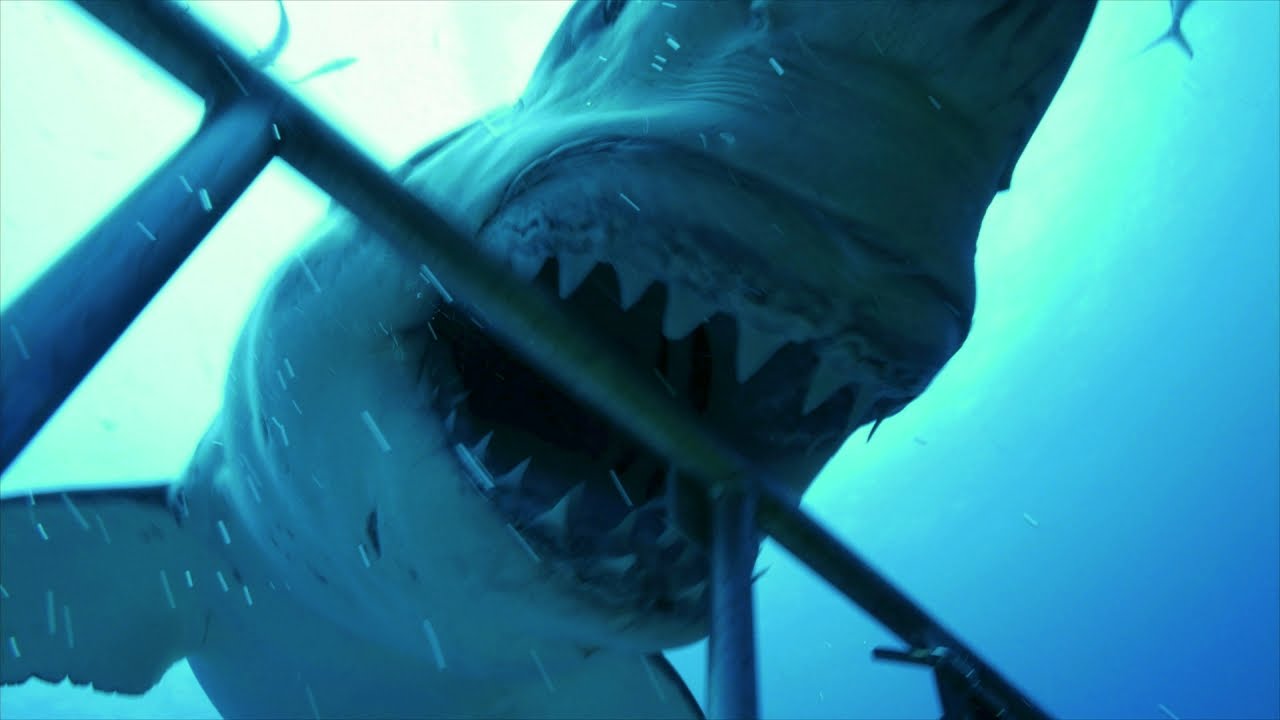 |
| Image from title photo from the video "These Shark Cage-Divers Never Saw This Coming! Get A Sneak Peek At Shark Week 2017!" |
The framing effect was you in various ways in these videos. In the Mythbusters video, if you looked behind you, you could see a shark frenzy where a group of sharks were viciously eating something. There was another video that showed the shark coming to camera and putting its mouth around it showing us the sharks teeth and into its mouth. It is footage like this that can cause people to fear sharks because they are only seeing the predator and dangerous side of this shark and not how they really are. Another virtual reality video that would be worse than this could be if you were watching sharks actually feeding with the animal being ripped apart and blood being seen in the water. I think a negative virtual reality video of any kind involving a shark would have a much more lasting impression than a video that just shows sharks swimming around you. Once someone sees sharks in a way that causes them to fear sharks, it is very hard for them to think of them in any other way.
 |
| Image from title photo from the video "Swimming With Sharks Makes People Want To Save Them" |
Works Cited
“Great White Shark Diving at Guadalupe Island and Farallon Islands - Great White Shark Diving Expeditions.” GREAT WHITE ADVENTURES, www.greatwhiteadventures.com/.
"Swimming With Sharks Makes People Want To Save Them", NerdAlert, 12 February 2018. https://www.youtube.com/watch?v=lYZzNvZ_yEM
"These Shark Cage-Divers Never Saw this Coming! Get A Sneak Peek At Shark Week 2017!", Discovery, 15 July 2017. https://www.youtube.com/watch?v=xHAgRgR62eM


Comments
Post a Comment